The government plans to hand over state lands and properties to private companies for the construction of towers and hotels—a mechanism expected to lead to the privatization of assets.
The "Palace of Congresses," a cultural monument owned by the Municipality of Tirana, was transferred to the Albanian Investment Corporation (AIC), a state-owned joint-stock company focused on the 'development' of public property, following a decision by the socialist majority members of the Municipal Council on July 25.
Built in the final years of the communist dictatorship to host the congresses of the former Party of Labour, this building has served various functions, from concerts and fairs to hosting international summits. But its fate now remains unclear.
According to the limited data made public by AIC, the building will undergo 'reconstruction' and the 'private partner will benefit the corresponding part of the development.' However, it is currently not clear what exactly the investor will gain from this public property.
Established by a special law in 2019, AIC's main objectives are: stimulating economic development through investment projects at the central, local, and regional levels in support of state development policies; efficiently utilizing state properties; and carrying out investments by mobilizing state and/or private capital.
The legal provisions gave this structure independence in the administration and use of state properties to lease, grant emphyteusis, leasing, sell, or use them as collateral, as well as to develop projects through special competitive procedures and direct negotiation.
But its activity to date has raised strong concerns that it is being conducted contrary to the legal basis for the preservation and security of public property and that the mechanisms used do not offer transparency on the efficient use of these properties.
Experts stress that there is a lack of clear analysis of the function and purpose of this structure and how it will impact the country's economic development by investing public properties in the construction sector.
"The law for the creation of this Corporation was opposed by the World Bank and the IMF, and these institutions did not see it as a structure that could develop the Albanian economy," says journalist Ola Xama, emphasizing that an economy develops based on "increased production, increased labor productivity, innovation, and good governance."
"Construction is a supporter of economic development, but not its promoter," Xama added.
The Corporation's Change of Focus

In practice, AIC—an acronym for Albania Investment Corporation—identifies potential state properties for development and, through the respective ministries that own them, proposes their transfer to its administration to the Council of Ministers. Furthermore, AIC can draft feasibility analyses and development projects, as well as open an 'auction' for private offers.
The entire property identification process is carried out without transparency and public consultation, while the public's need and interest are arbitrarily determined by a governing board appointed by the Minister of Economy and the Corporation's executive director.
In its first years of operation, its activity focused on projects in the field of energy, such as the construction of photovoltaic parks, tourist investments in protected areas or military properties, such as the Pashaliman Base, Divjakë-Karavasta National Park, and the Blue Eye in Sarandë. But the focus radically changed after Elira Kokona, a close collaborator of Prime Minister Edi Rama, took over the corporation's leadership.
The work concentrated on concrete projects for the 'revitalization' of stadiums or other important public buildings—a term that implies the 'forgiving' (giving away) of the public land surrounding them, mainly in coveted areas of Tirana, in exchange for reconstruction costs or square meters of construction for administrative offices.
In an event held in January, in the presence of private investors, the banking sector, and the diplomatic corps, some of the public property development projects were made public. Government representatives offered guarantees for the public benefit of this initiative and facilities for entrepreneurs who would cooperate in partnership with the state.
Prime Minister Edi Rama presented the initiative as a "bridge" of partnership with private enterprise for the construction of "new public, administrative, tourist, cultural, and social infrastructure works..." and called on banks to support these investments.
Meanwhile, Executive Director Elira Kokona stated that the Corporation offered for these projects "public properties cleared of ownership issues, with a certificate of ownership and development permit," as well as mediation with Albanian banks and other public institutions.
Rama stressed that, unlike the previous method like the "Albania 1 Euro" initiative, this new method of utilizing state property would guarantee benefits for the state as a shareholder.
However, as independent audits and economic experts conclude, the way this agency is handling public property contradicts the current laws protecting the security of public property and demonstrates a lack of analyses and mechanisms that guarantee its effective and transparent management.
A audit report by the Supreme State Audit (KLSH), which analyzed its work from its creation until 2024, found legal conflicts in the functioning of this structure and a lack of clear mechanisms for monitoring the effectiveness of procedures and project execution. According to KLSH, these "present a high operational and institutional risk for the management of state properties, and do not guarantee their security."
"Furthermore, the processes defined in these legal acts are not in accordance with Albanian legislation on Public Procurement, but rely exclusively on the powers and internal procedures of the AIC," KLSH further notes, highlighting that the Corporation lacks a standard methodology for selecting project ideas, has no feasibility studies, and changes its strategies and work plans from year to year.
Financially, to date, it has been a burden on the state budget, absorbing millions of euros for salaries and operating costs without managing to finalize the projects for which it was established.
KLSH also points out the lack of financial stability and finds violations in the act of granting a loan of 2.2 billion lek (22 million euros) as debt to Albcontroll, another state-owned joint-stock company, which is in difficulty after its bank accounts were blocked on behalf of Italian businessman Becchetti, who won an arbitration case against the Albanian state.
According to economic experts, the functioning of the Investment Corporation and the mechanisms for selecting state properties for development leave many questions about public benefit and the true intentions, opening up space, according to them, for clientelism and the irreversible alienation of public property.
"In theory, this instrument is used by the state to achieve established objectives for the use of national assets for the benefit of society and future generations," said Azmi Stringa, a lecturer of Finance at the University of New York in Tirana.
"What makes a difference in results is the real purpose of their use and the level of good governance," he warned.
Stringa compares the Corporation to the Public-Private Partnership (PPP) mechanism, widely used by the socialist government in various sectors, emphasizing that the results of these contracts depend on the purpose of using the instrument and the capacity and integrity of state institutions to guarantee public benefit.
The experience with PPPs, according to him, shows that it is not enough for procedures and controls to be good on paper; they must also be effectively implemented.
The State as a Property Developer
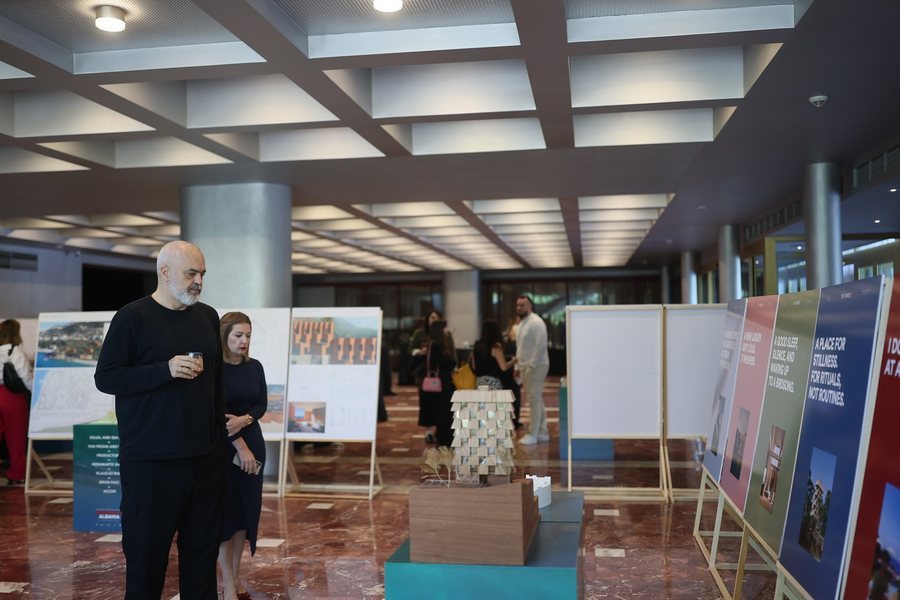
In the first years after its establishment, AIC did not finalize any projects. But after Elira Kokona's appointment at the end of 2023, the phase of collecting public properties into assets and lands began, in most cases without transparent development projects.
At the end of May 2024, a decision by the Council of Ministers transferred 17 public properties—which previously belonged to ministries or other law enforcement agencies—to the ownership of this structure, as well as 8 state buildings that will retain their public function but will undergo development projects.
The ownership of the 'Brigades Palace' was also definitively transferred to AIC in a government meeting at the end of July. In the same meeting, the transfer of ownership of 5 buildings and their land, which were previously owned by state agencies, was approved for the purpose of developing the "Inspectorates Corpus" project—a new building expected to house the employees of these public institutions. The existing buildings, located in high-value land areas, will be demolished to make way for other corporation investments for which there are still no transparent projects.
The Corporation has created two dependent entities: "Albanian State Development & Real Estate," for the realization of a tourist resort on Sazan Island—a project by US President Donald Trump's son-in-law, Jared Kushner—and "Durana Tech Park," the company for financing and constructing a technological park in Durrës.
With the properties being transferred to the Corporation's ownership, the state claims to be involved in relationships with private entities in the 'real estate' market to promote the country's economic development. But these claims remain unclear and do not provide guarantees for public benefit.
"Structural guarantees are missing," Doriana Musai, an architect and activist for the protection of cultural monuments, told BIRN. According to her, the Corporation acts as a public capital commercial company, outside the rules of procurement and institutional control.
"Partners are chosen without competition, there are no obligations for measuring public impact, and developments have focused on quick-profit tourism projects. Under these conditions, the risk of political capture and limited benefit for the community is real," Musai explained.
Meanwhile, Azmi Stringa sees the AIC in a broader picture of the problems shown by the current experience of corporate governance with state-owned joint-stock companies, which he says "leaves much to be desired."
"This experience shows us that there are major challenges to ensuring that corporations protect the interests of taxpayers, when they are represented as shareholders by the Government, which may have different goals and interests from the citizens," he said.
Stringa lists a number of "deep problems" in the corporate governance of the public sector, such as: "lack of independence of governing structures and formal supervisory bodies; political rather than professional appointments; lack of a 'tone at the top' with high integrity standards; non-real implementation of ethics codes and internal control systems; weak capacities for managing complex financial and ownership instruments; lack of transparency, accountability, and managerial oversight; and ineffective management and mismanagement of public funds and assets."
In such a context, according to him, "even if the Corporation had correct procedures on paper, the current institutional environment and managerial culture in Albania do not offer guarantees that they will be implemented with integrity and impartiality."
For journalist Ola Xama, the state's transformation into a property development agency was done without any analysis to guarantee public benefit in transactions with the private sector.
"From the study I conducted on the open calls, such as those for stadiums or property development in Tirana, the area the state receives varies from 30–35% in the capital and 45% in the stadium areas," a percentage which she says is less than what a private landowner in Tirana earns.
On the other hand, Xama questions the real need for new state offices, seeing the justification of giving public properties for this reason as unfounded.
"We do not have an analysis of how much the cost would be if the state built it and how much the cost will be if the private entity builds it. Then, the state could manage these properties by renting them out, and the ownership, for both the land and the building, would remain public and not private. Because we are talking about properties that belong to the public and not just one generation, but future generations," she said.
Taking the development of the public property of the Cadastre building as an example, Xama stresses that there is no justified need for new offices, when their reconstruction after the earthquake damage has just been completed.
"So, questions remain about the real needs the state has to house its employees and why it chooses this development model," she said.
The Risk of Clientelism and the Irreversible Loss of Property
The Corporation has included the "Palace of Congresses" in the category of "Investment Projects with Public Institutions," where the goal is the 'revitalization' of existing urban areas, and the list continues with 'revitalization' projects for several stadiums: "Niko Dovana" in Durrës, "Selman Stërmasi" in Tirana, "Flamurtari" in Vlorë, "Skënderbeu" in Korçë, and the "Asllan Rusi" Handball Palace.
The stadium projects foresee their reconstruction by private entities in exchange for public land near them for massive construction of towers and service units.
Other project categories relate to 'strategic projects,' which include the Durrës technological park, Expo-Albania in Tirana, and the 'Vrina' project, which foresees investments in the village of Vrinë within the Butrint Park.
In urban areas, there is a sub-project named 'Shards', where there is no concrete data on the public properties that will be transferred to private entities, but according to Elira Kokona, it concerns 'shards of state land' that will be given to private investors according to their requests so as not to hinder projects started next to this land.
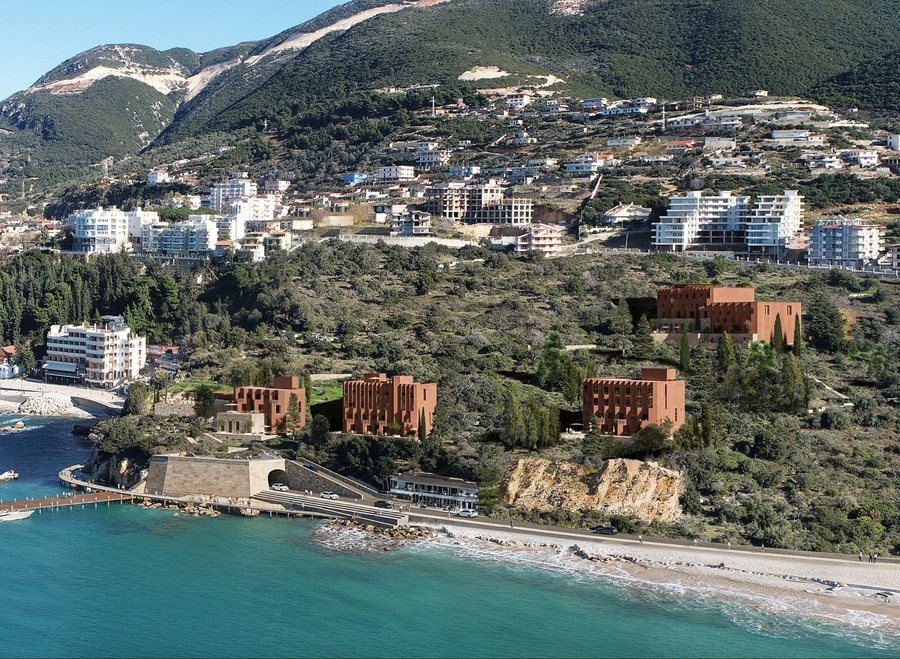
Coastal projects have so far resulted in the closing of procedures for the government villas of Velipojë and Vlorë, where 5-star hotels will be built and where the state plans to receive 'suites' in exchange, to be used by state authorities. The winning companies in these two projects were won by businessmen close to the government, the same circle that has benefited from the 'strategic investments' law.
In addition to the alienation of public property through these projects, similar to the law on 'Strategic Investments,' the state is made available to these projects with support from state institutions for auxiliary infrastructure, such as: roads, water supply, sewerage, electricity, and telecommunications, as well as the 'readiness' of institutions for approving permits and licenses in record time.
For architect Doriana Musai, the way the corporation is conceived creates a favorable environment for 'clientelism' and 'economic concentration.'
"It takes public properties under administration and develops them through long-term agreements with partners chosen without competition," she explains, adding that there is a lack of competition, transparency, and the exclusion of local actors.
Drawing an analogy with the risks of this scheme, Musai cites as an example the way the 1993 Law 7665 was operated, which provided for the granting of areas prioritized for tourism for 99 years through long-term agreements with selected partners, without competition.
"As a legal scheme, it practically ended up in tourism developments along the Bay of Durrës, Lalzi, and other areas, where public lands were actually privatized and the public lost free access to them," she recalls.
Journalist Ola Xama also stresses that there is a risk of "clientelism" being favored by the corporation and emphasizes that it could become 'a new form of privatization of state property.'
The Investment Corporation, Xama stresses, "is a vertical structure which, although it has a board, we do not see the board's decision-making, but we see that all projects are announced by the Prime Minister, even those that belong to the municipalities."
In this context, according to her, the control of its work for conflicts of interest, money laundering, and other risks is also questioned.
"The main risk is how much the authorities and professionals tasked with reporting such cases can act... when we are dealing with major investments that are promoted by the Prime Minister himself," Xama asks.
Even for finance professor Azmi Stringa, the risk of clientelism at AIC is high.
"In the absence of strong mechanisms of control, audit, and transparency, there is a risk that the Corporation will become another channel for the transfer of public assets toward narrow private interests, instead of being a tool for sustainable and inclusive economic development," he said.
Stringa compares what the Corporation is doing today with the PPP contracts of 2016-2017, only now, according to him, the responsibility lies with few people and the process passes through few stages, making the level of transparency and accountability even lower.
"So there is a high probability that the purpose of creating the corporation is something deeper than just the desire for good," he notes, raising concern about the fate of public properties being transferred to the ownership of a commercial company.
"By giving the assets to the Corporation, we have also undertaken the risk that, as in any joint-stock company, they may be lost, mismanaged, or claimed by others, such as banks," he says.
Stringa argues that the transfer of ownership is a transaction that must be reported in accounting and in active balances with their market value at the time of transfer, which the Corporation did not do in its 2024 financial statements.
In this context, according to him, the book value that the transferred properties had in the books of state institutions is unknown today, as is the market value of these assets at the time of transfer, to thus document the legitimate interest of the state and how exposed it will be in the future.
"No person of sound mind, and even less the state, transfers assets and properties to another legal entity without defining their market value," he concluded.
Shpërndaje te miqtë