It often happens that in immediate public perception, protests are judged solely by whether or not they bring down the government, whether a leader resigns, whether a law is withdrawn, or whether another political demand is fulfilled.
But history shows that the most important protests do not bring immediate political change; rather, they transform their societies. They serve as catalysts that change the way citizens see themselves, power, and the limits of what is possible.
In this sense, the Flamingo Revolution is one of the most important civic events of recent decades.
Not because it has solved Albania’s political problems, but because it has initiated a process of civic awakening from lethargy, resignation, or escape through emigration.
This is the most difficult transformation and the turning point for the political changes our society demands.
A common mistake in public perception is what is known as the Nirvana fallacy: the tendency to believe that there is always an ideal solution for every problem and to dismiss every other alternative by comparing it to that ideal, which is often unrealistic and unattainable.
By this logic, if a contribution is not the panacea for all the country’s ills, then it is worthless.
Such a fallacy is at the core of the criticism being leveled these days against the protesters for not establishing a political organization, for not proposing a governing program, for not producing new leaders, and so on.
But history does not work this way.
Democracies have never been built anywhere through a single event but through hundreds of small processes that together changed political culture.
The most successful civic movements around the world, even when they did not achieve their immediate objectives, permanently transformed their societies.
That is why the Flamingo Revolution should not be judged by the expectation that it must necessarily solve our 36-year-old political problems.
A single protest can never solve endemic and widespread corruption, the capture of the state by criminal interests, crony capitalism, mass emigration, environmental destruction, crippled education, poor healthcare, or electoral reform.
But a protest can do the most important thing: convince citizens that change is possible and that the responsibility to make it happen begins with themselves.
That is why it is time to view the Flamingo Revolution realistically.
We should not expect it to produce, within a few weeks, a New Albania, complete with a constitution, a development plan, and a new political elite.
Those come later.
The first step is a society that demands and fights for them.
The Flamingo Revolution has been a blessing in this regard because it has awakened society and raised the awareness of Albanians everywhere in the world.
It has shifted public debate, forcing the media and public discourse to address issues that until yesterday were being avoided.
It has exposed the arrogance and true colors of those in power.
It has united people who did not know each other by creating new networks of citizens.
But perhaps the greatest achievement of the Flamingo Revolution is that it has stripped our elites of their masks.
It has revealed an elite that for years preached morality but, the moment people took to the streets, chose silence and retreat.
Thus, it became clear that many academics, intellectuals, analysts, activists, and public figures prefer personal security over publicly defending the principles they preach.
Many of them do not dare openly defend the protest or say or write what they truly think.
Not because they disagree, but because they fear the personal cost.
Some are funded by the government, others occupy public sector positions, some have vested interests, some have simply grown accustomed to comfort, and some have made servility a way of life.
The paradox is that quite a few of them, in private conversations, support the protests.
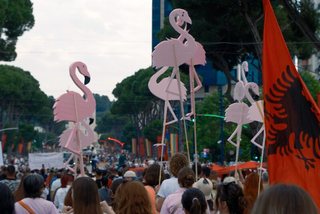
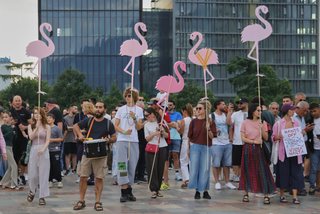
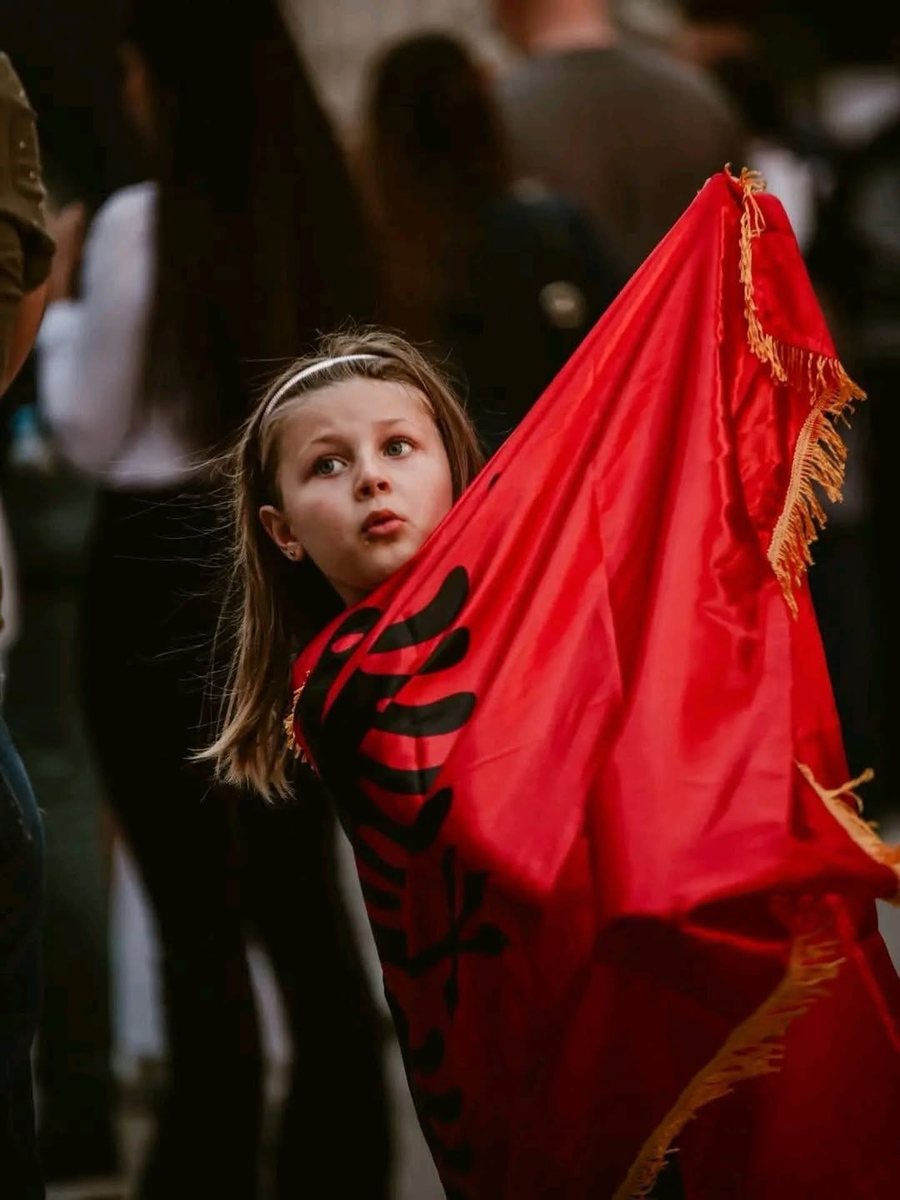
Secretly, they are pleased when the protest grows. They like seeing thousands of citizens peacefully gathered in the square with their children, displaying colorful creativity.
But publicly they remain silent. They celebrate in private what they do not have the courage to defend in public.
On the other side, there are thousands of young people who hold neither public positions, nor privileges, nor protection.
They have given up their comfort and taken to the streets.
They have assumed a cost that many of those who have preached morality for years never take upon themselves.
They are a generation that seems to have fewer complexes, less fear, and less willingness to be blackmailed and subdued.
They have not yet learned to self-censor, to weigh every word out of fear of losing a privilege.
They have not entered that web of dependency, compromise, and calculation that often paralyzes the older generation.
This is precisely what makes them freer.
Their freedom does not come from the absence of risk, but from the fact that they consider dignity more important than comfort, and the future more important than the convenience of the present.
This is precisely what makes them freer.
The irony is that while they protest, part of the “elite” continues the debate from television studios to cafés.
They offer their “expert” opinions, demand perfect strategies, and criticize those who are in the square without ever taking upon themselves the burden of engagement.
Even more paradoxical is the behavior of certain intellectuals who expect protesters to solve all their problems with a single stroke of the pen.
They themselves do not protest, do not organize, or take risks, but wait for someone else to do the work and then judge them from the armchair with a remote control in hand.
Yet they still fail to understand that, at its core, this protest is not simply about a lagoon, a project, or a government decision.
It is a protest for dignity.
For the right of citizens to be heard, to be respected, and not to be treated as spectators in their own country.
Freedom is not merely the right to vote once every four years; it is the ability to speak without fear, to organize, to oppose, and to participate in decision-making.
A society without dignity can never truly be free.
And this is precisely where the greatest value of the Flamingo Revolution lies: it has broken fear.
Fear is the foundation of every long-lasting power structure.
Fear of losing one’s job, fear of being attacked personally, fear of being left alone.
Fear that nothing will change.
When this fear begins to break, the relationship between citizen and power changes.
When citizens regain dignity, they begin to defend their freedom as well.
In this sense, the protest will not complete the process of change, but it represents the beginning of a new era.
Perhaps the government will not fall tomorrow.
Perhaps the demands will not be met immediately.
But something has already been transformed irreversibly: thousands of citizens have understood that they are not alone, that their voice can be heard, and that dignity is not a privilege granted by power, but a right defended by citizens themselves.
This is the greatest blessing a protest can bring.
Not because it changes a government, but because it changes a people.
And when a people change, sooner or later, it is only a matter of time before the government changes as well.
Shpërndaje te miqtë