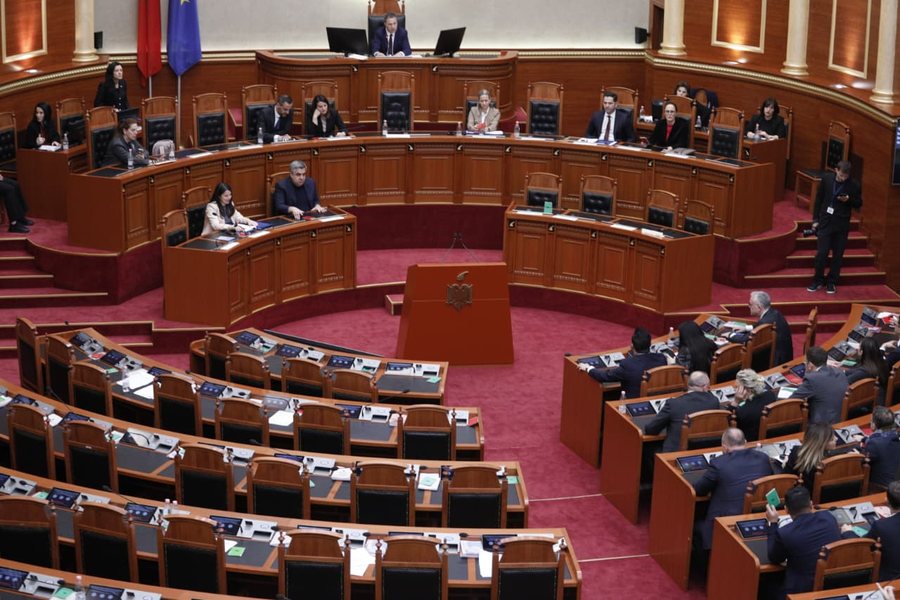
Albania’s Parliament has approved amendments allowing wind farms and agrivoltaic solar projects to be developed on agricultural land, despite criticism from lawmakers who warned the move could put pressure on the country’s limited farmland.
The approved legislation introduces additions and amendments to the 2004 law titled “On the Protection of Agricultural Land.”
The new provisions grant the Council of Ministers as the authority to define criteria for the use of agricultural land for agro-photovoltaic and wind energy activities on land with a soil quality rating of up to 8, which is considered to have lower fertility.
The law passed with 77 votes in favor, while Socialist MP Erion Braçe and Mundësia party MP Erald Kapri voted against it. The opposition boycotted the parliamentary session.
During the parliamentary debate, Braçe argued that agricultural land should not be used for industrial activities and warned that the law gives the government broad authority to decide where renewable energy projects can be built instead of establishing clearer limits in the legislation. He questioned how many licenses have already been issued for wind and agrivoltaic projects on farmland and cautioned that, without stronger safeguards, productive agricultural land could gradually be converted for energy production. “We do not have unlimited agricultural land,” he said.
Agriculture Minister Andis Salla defended the amendments, saying they are intended to modernize Albanian agriculture by introducing new technologies while preserving farmland’s primary function.
The debate comes as agriculture sector remains still important for Albania’s economy, particularly in terms of employment. According to the World Bank, around one-third of Albania’s workforce is employed in agriculture, although the sector’s economic importance has declined over time as the country’s economy has shifted toward services, tourism and construction.