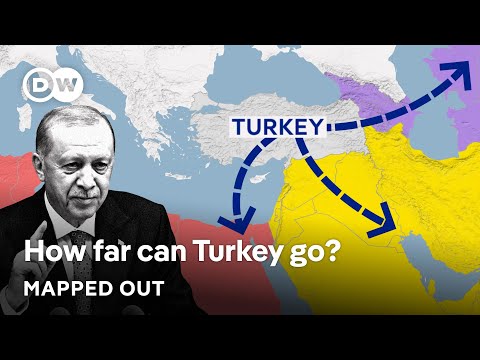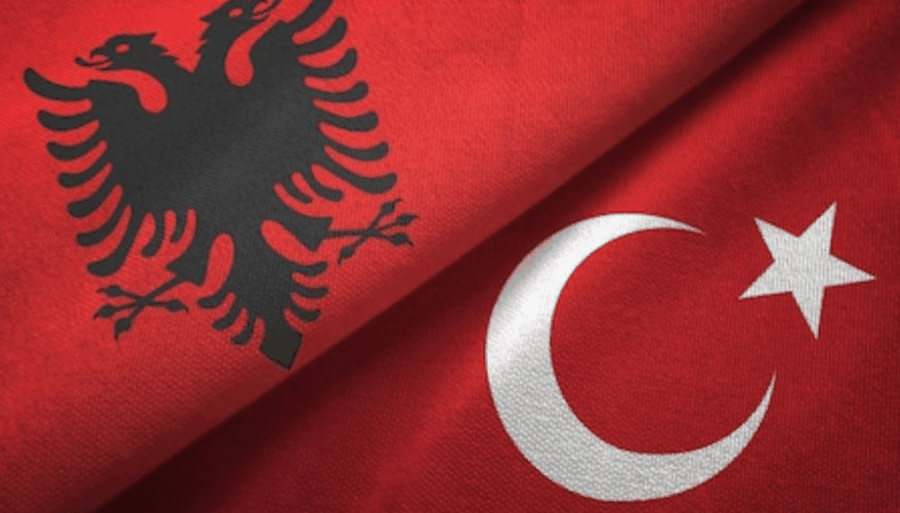
Last year, Turkey became Albania’s largest foreign investor. A decade ago, it was Greece, which held that position.
In 2024, Turkey invested €257 million in Albania, while Greece contributed only €14 million. This an indication of major shift in foreign capital flows in Albania.
A Decade of Economic Realignment
The transformation of the external sector in Albanian economy over the past ten years has been striking:
The largest bank in Albania is Turkish-owned, controlling over 25% of the banking market. The second largest is Albanian-owned. For many decades the largest bank was Austrian.
In mining, the two dominant companies are Turkish: Albchrome, which operates the country’s largest chromium mine, and Beralb, a Turkish-Chinese joint venture that manages Albania’s biggest copper deposits.
The leading metal producer, also the country’s largest manufacturing company, is Turkish.
Albania’s only national airline is a joint venture with a Turkish partner.
The two largest private electricity producers are Turkish, while the main power producer, KESH, is a state-owned Albanian enterprise. KESH has also formed a joint venture with a Saudi company in the energy sector.
The largest oil producer, formerly Canadian-owned, is now Chinese-owned and is, reportedly, being acquired by a company registered in Qatar. All fuel imports are handled by Albanian companies.
In the port sector, as operations at the Port of Durrës are wound down, all port activities are being transferred to a private Albanian port.
In place of the Port of Durrës, a luxury yacht marina is under construction by a company controlled through a network of shell firms owned an Emirati investor. Meanwhile, marinas in Saranda, Vlora, and other coastal areas have been or are being developed by Albanian firms.
In aviation, after a German company withdrew from managing Rinas Airport, control first passed to a Chinese firm and later to an Albanian one. Vlora Airport is now under construction by Albanian investors from Kosovo.
In telecommunications, of the four major companies operating just a few years ago — one British, two Turkish, and one German — only Vodafone (British) remains. The other three were acquired by a Hungarian group.
A Hungarian bank has also purchased a formerly French-owned bank, while another French bank and all Greek banks have been bought by Albanian-controlled institutions.
Nearly all public contracts and concessions in strategic sectors over the past decade have gone to Albanian companies or to firms registered in jurisdictions that do not disclose ownership.
A decade ago, 55% of foreign-owned enterprises in Albania were Italian or Greek; today that figure has fallen to 45%.
Likewise, trade with EU countries, which once made up 65% of Albania’s total trade volume, now accounts for only 55%.
Albania today relies primarily on domestic businesses, whose activities are concentrated in trade, services, public contracts, and licenses — supported largely by investments from Eastern countries, especially Turkey, Saudi Arabia, the UAE, and, to a lesser extent, China.
None of Albania’s traditional strategic partners — the European Union or the United States — maintain significant economic influence. Notably, Italy and Greece, once dominant, have seen their roles decline sharply. Italy remains Albania’s main trading partner, but Greece now ranks fourth, behind China and Turkey.
This new economic structure, dominated by domestic and Eastern (Turkish-Chinese-Arab) capital, carries profound implications well beyond the economy itself.
Consequences Beyond the Economy
One of the primary benefits of Western investment lies in the transfer of advanced technology, modern management practices, and principles of transparency and accountability.
In countries struggling with high corruption and a legacy of underdevelopment, Western investments has traditionally promoted integrity in both the business sector and public administration.
The retreat of Western enterprises from Albania has also weakened the incentive for Western embassies and institutions to speak out against corruption and misgovernance, since such issues now have little direct impact on their own countries’ businesses or citizens.
An economy isolated from Western capital and influence is far easier for the state to dominate. The Albanian government has assumed an increasingly decisive role in determining which companies succeed or fail — and, by extension, who becomes wealthy and who does not.
In a country where capital is limited and dominated by state resources and informal financial flows that depend on government tolerance to operate; where the economy is centered on trade, construction, and extractive industries; and where competition is weak, the relationship with political power has become the most decisive factor for business success.
Domestic firms — and those from autocratic or low-integrity environments — are better positioned to thrive in an economy built on political favoritism and clientelism, rather than on free competition.
Shpërndaje te miqtë