Greece is currently going through a particularly important period. Everything is in the final stretch ahead of the upcoming elections.
These elections are important for the Greek people because they face the strong dilemma of whether they want the New Democracy government under Mitsotakis to continue for a third consecutive term.
The question for the Greek people is not whether they want the plan proposed by ND, since it has already been implemented for seven years; the question is whether they want its continuation or whether they want a radical change in the political landscape.
Why radical change? Because the entire opposition is highlighting its differences with the current government. The opposition parties have made it their purpose to disagree with the Mitsotakis government on virtually everything. Regardless of the subject matter, their line is the same.
Beyond the ideological differences that may exist between the parties, the basis of the problem is how the current government is perceived.
The opposition parties have built a case that the Mitsotakis government is the most corrupt government since the restoration of democracy (the post-junta period is considered to be the period from 1974 until today, after the junta fell).
Former members of ND have also joined this narrative, with the first and most prominent being former president of ND and Prime Minister of Greece (2012–2015), Antonis Samaras. He has been publicly critical of the Mitsotakis government on a number of issues, the most important being Greek-Turkish relations, corruption, and the now-global phenomenon known as the “woke agenda.”
Samaras publicly opposed government actions such as the bill on same-sex marriage, a bill that he voted against.
As for corruption, he was critical of the current situation in Greece on several occasions, making references to the fact that, essentially, the government is turning a blind eye to the cartels of Greece’s major business interests.
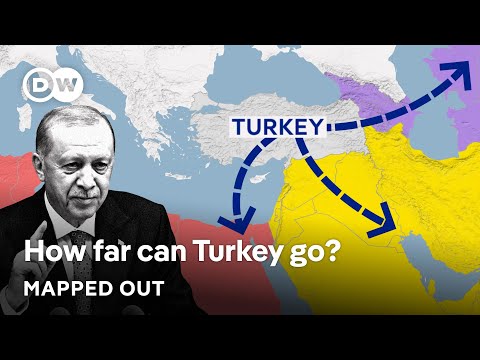
The most important point of disagreement, however, is Greek-Turkish relations. He has essentially made it clear that he considers the government and its officials, such as Mitsotakis himself and Foreign Minister George Gerapetritis, to be submissive to Erdogan’s demands.
Because of this issue, New Democracy and Mitsotakis expelled him from the party, and he is now an independent member of parliament.
Samaras’s response, however, continues to this day through an organized plan and, although he has never admitted it himself, he will create his own party.
This is not an unfamiliar act for him. In 1992, Samaras was the foreign minister of the then-ND government of Konstantinos Mitsotakis, the father of the current prime minister. The Foreign Ministry under Samaras followed a tougher line than the government desired on two important issues: Greek-Turkish relations and the so-called Macedonian question, which concerned the name of the then Former Yugoslav Republic of Macedonia, today’s North Macedonia.
This stance led to his removal as minister, followed by his departure from the party. Then, in 1993, he created Politiki Anixi (Political Spring), a clearly personality-based party, and perhaps its real difference from the ND of that time was centered on a single issue: the Macedonian problem.
The Greek Constitution provides that, in order for a government to be formed, it must have the declared vote of confidence of a majority in parliament, meaning 151 out of 300 MPs. In the 1990 elections, the government received 150 seats and therefore did not have a majority.
At that point, an agreement was reached between ND and the DI.ANA party under which one of its MPs would vote in favor so that a government could be formed, which is what happened.
When Samaras created his new party, he encouraged other MPs who were close to him to become independent and follow him. Only one MP was needed, and ND lost its majority, resulting in early elections being called in October 1993.
In these elections, PASOK, led by Andreas Papandreou, emerged as the largest party with a majority, ND came second, and Samaras’s new party, with 10 seats, came third. This event has been etched into the memory of hardline New Democrats, as they believed that Samaras had brought down the government that he had once defended.
Konstantinos Mitsotakis himself admitted in an interview that he would never forgive Samaras for this act, essentially calling it a betrayal. Before the 2004 European elections, Samaras and his MPs returned to ND, and Political Spring was considered a thing of the past.
Nevertheless, Samaras was elected president of ND in 2009, suggesting that those events had been left in the past and forgotten. In that election, Dora Bakoyannis, the daughter of Konstantinos Mitsotakis and sister of the current prime minister, came second.
Samaras still talks about his victory over Bakoyannis to this day, recently saying that Dora has still not recovered from her defeat.
Samaras was elected prime minister in 2012 without achieving a majority, as his party received 129 seats. A coalition government was then formed between ND, PASOK, and DIMAR. At that time, the only subject of discussion was the economic crisis. Samaras was in favor of Greece accepting the memoranda from the EU and the austerity policies.
The Parliament, based on the Constitution, elects the President of the Republic of Greece. The President of the Republic is elected if he or she receives two-thirds of the total number of MPs in the first vote (200 seats). If no result is achieved, the vote is repeated after five days, and a majority of 200 MPs is again required.
If, once again, no candidate manages to receive the required majority, a third vote follows, again after five days, but this time a majority of three-fifths of the total number of MPs is required (180 seats).
If no one is elected, Parliament is dissolved, and parliamentary elections are called. This happened, and the Samaras government fell after its candidate failed to receive 180 votes. In 2015, parliamentary elections were held, with Samaras coming second and SYRIZA, the Coalition of the Radical Left, emerging as the largest party.
The reason Tsipras and SYRIZA were elected was clearly their position on the economic crisis, and, as a party, they were completely opposed to every austerity measure imposed by the EU. Tsipras called a referendum so that the people could decide whether they wanted the memorandum or not. “No” won, and Samaras, being a strong supporter of “Yes,” resigned as president of ND.
In the election for the leadership of ND, the Samaras camp supported Kyriakos Mitsotakis, the current prime minister. Samaras never publicly supported anyone, but reports said that he influenced people to vote for Mitsotakis.
Therefore, the current prime minister and president of ND was elected with the support of his now-major political opponent and the then-greatest political opponent of his father.
Today, Samaras, as an independent MP, is ready to create a new party once again in order to challenge Mitsotakis. As it appears, Samaras, being knowledgeable about politics in Greece, clearly does not believe that he himself will be elected to form a government.
The entire plan is based on the theory of gaining a percentage of the vote and a small share of ND voters who are aligned with him, simply to deprive Mitsotakis of a majority, forcing him to reconsider his position and perhaps issue a call for Samaras to return to the party, on the condition that policies satisfying the views of the conservative wing of New Democracy are followed.
Shpërndaje te miqtë